Showing posts with label CHILE. Show all posts

Thursday, February 26, 2015

Costanera Lago,Villarica, Chile

Villarrica is one of Chile's most active volcanoes, rising above the lake and town of the same name. The volcano is also known as Rucapillán, a Mapuche word meaning "House of the Pillán" or "House of the spirit". It is the westernmost of three largest rato volcanoes that trend perpendicular to the Andean chain along the Gastre Fault. Villarrica, along with Quetrupillán and the Chilean portion of Lanín, are protected within Villarrica National Park. Ascents of the volcano are popular with several guided ascents reaching the top during summer.
Villarrica, with its lava of basaltic-andesitic composition, is one of a small number worldwide known to have an active (but in this case intermittent) lava lake within its crater. The volcano usually generates strombolian eruptions, with ejection of incandescentpyroclasts and lava flows. Melting of snow and glacier ice as well as rainfalls often cause massive lahars (mud and debris flows), such as during the eruptions of 1964 and 1971.


Friday, February 20, 2015

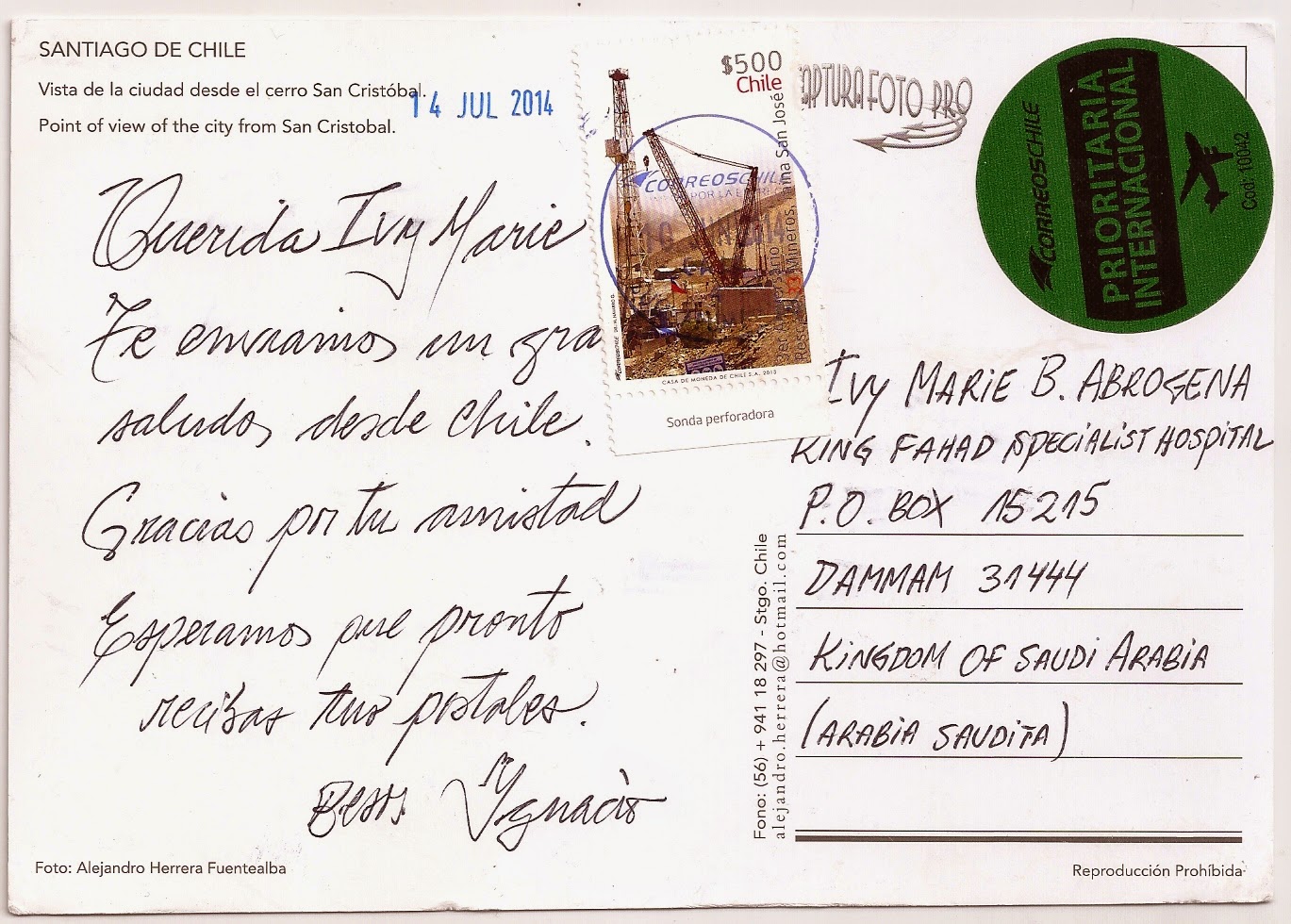
San Cristobal, Santiago, Chile

Cerro San Cristóbal (San Cristóbal Hill) is a hill in central-northern SantiagoChile. It rises 880 m. AMSL and about 300 m. above the rest of Santiago; the peak is the second highest point in the city, after Cerro Renca. Cerro San Cristóbal was named by the Spanish-Chilean San Cristóbal family, although its original name is Tupahue (Mapudungun: place of god or gods). The San Cristóbal family held a quarry on the hill's south side, close to the Mapocho River. Limestone from the quarry was used in the building of the first containments of the Mapocho River and also in the construction of its bridges. San Cristobal is one of the main hills that make up Santiago's Metropolitan Park.


Panoramic View, Santiago, Chile

Santiago, also Santiago de Chile [san̪ˈtja.ɣo ðe ˈtʃi.le], is thecapital and largest city of Chile. It is also the center of its largest conurbation. Santiago is located in the country's central valley, at an elevation of 520 m (1,706 ft) above mean sea level.
Founded in 1541, Santiago has been the capital city of Chile since colonial times. The city has a downtown core of 19th century neoclassical architecture and winding side-streets, dotted by art deco, neo-gothic, and other styles. Santiago's cityscape is shaped by several stand-alone hills and the fast-flowing Mapocho River, lined by parks such as Parque Forestal. Mountains of the Andes chain can be seen from most points in the city. These mountains contribute to a considerable smog problem, particularly during winter. The city outskirts are surrounded by vineyards, and Santiago is within a few hours of both the mountains and the Pacific Ocean.